

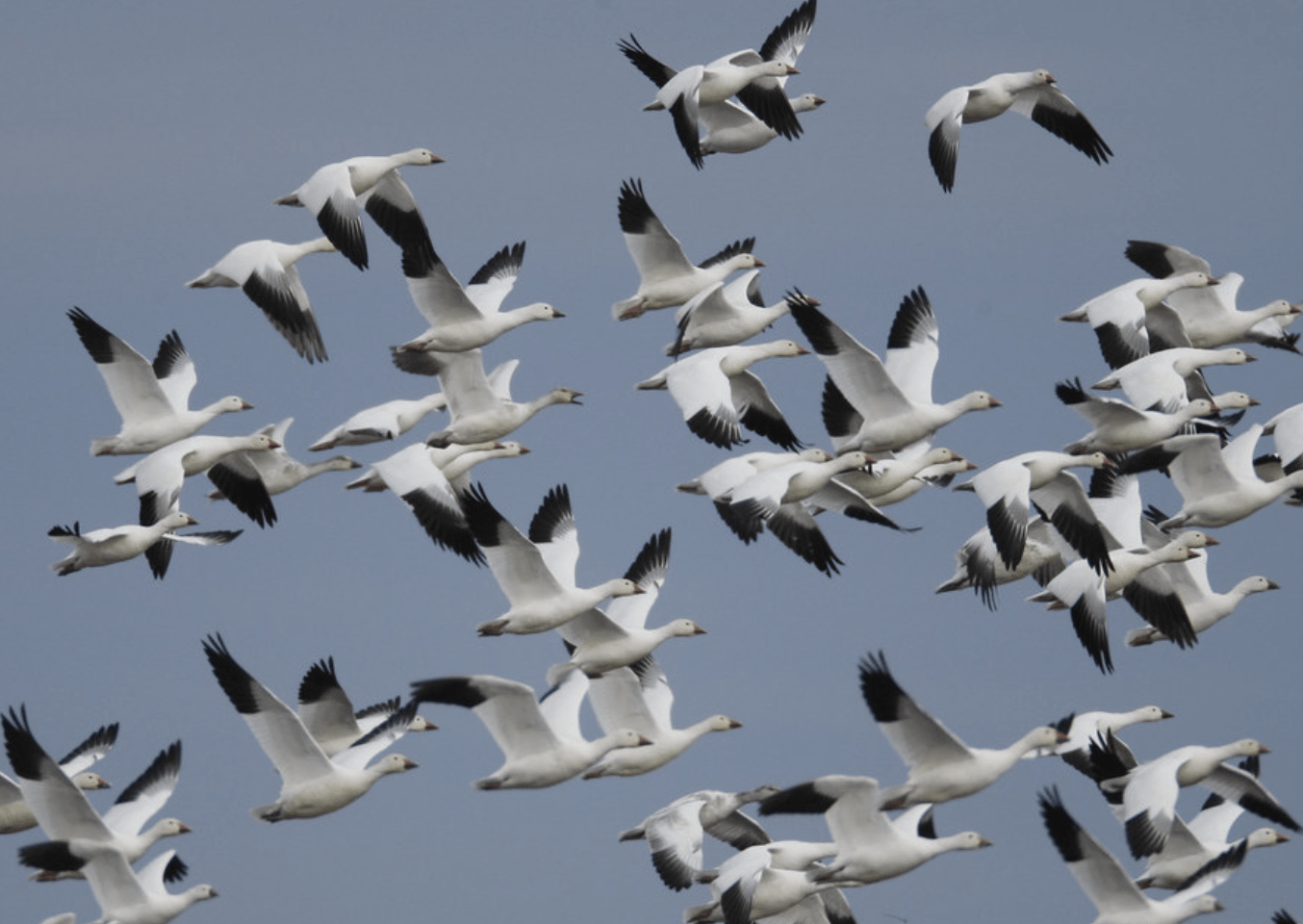
CBS News – Hundreds of dead snow geese found in Pennsylvania are believed to have had avian flu, the Game Commission says.
The agency said in a news release Tuesday that it’s coordinating an effort to safely remove, test and dispose of snow geese that were found dead at a quarry in Northampton County.
According to the Pennsylvania Game Commission, late 2024 and early 2025 saw a sharp resurgence of highly pathogenic avian influenza, or HPAI, in the state’s wild birds.
The U.S. outbreak began in 2022 and has impacted wild and domestic birds in every state.
The Game Commission says wild waterfowl and shorebirds are considered natural carriers of bird flu and might shed the virus despite appearing healthy. It can also make raptors, scavengers and wild poultry sick … READ MORE [free to read]
OFFICIAL NEWS RELEASE:
INFLUENZA SUSPECTED IN RECENT SNOW GOOSE MORTALITIES
December 16, 2025, Pennsylvania Game Commission
HARRISBURG — Avian influenza is suspected to have caused the deaths of hundreds of snow geese found at a Northampton County quarry.
The Pennsylvania Game Commission is coordinating a response to this incident that includes safe removal, testing and disposal of these birds.
Those encountering other sick or dead wild birds anywhere in Pennsylvania can report them to the Game Commission by calling 1-833-PGC-WILD (1-833-742-9453). Any sick or dead domestic birds should be reported to Pennsylvania Department of Agriculture at 717-772-2852. If you have had contact with sick or dead birds and are not feeling well, contact your primary care physician or the Pennsylvania Department of Health at 877-PA-HEALTH (877-724-3258).
The U.S. outbreak of highly pathogenic avian influenza (HPAI) began in January 2022 and has impacted wild and domestic birds in every state. In Pennsylvania, there was a sharp resurgence of HPAI cases in wild birds in late 2024 and early 2025. Impacts tailed off after several weeks, though the virus continued to be detected at lower levels.
Wild waterfowl and shorebirds are considered natural carriers for avian influenza viruses and might shed the virus in their feces and saliva despite appearing healthy. HPAI also can lead to sickness or death in raptors (hawks, eagles), avian scavengers (crows, gulls, ravens) and wild poultry (turkey, grouse).
The virus typically does not affect bird species that frequent backyard bird feeders. Exercise good hygiene when maintaining bird feeders and baths, emptying them every couple of weeks and disinfecting them with a 10% household bleach solution. If you notice multiple sick or dead birds over a short period of time, strongly consider leaving feeders down and baths empty to not make any potential outbreak worse.
Clinical signs of infection in wild birds are often non-specific, but might include neurologic dysfunction such as circling, head tilting, and difficulty flying.
HPAI can potentially infect humans, though the U.S. Centers for Disease Control and Prevention has declared that the current HPAI outbreak is primarily an animal health issue that poses low risk to the health of the general public.
People can help safeguard themselves against HPAI by always viewing wildlife from a safe distance, avoiding contact with wild birds or their feces and not handling wildlife unless you’re hunting, trapping or otherwise authorized to do so.
Waterfowl hunters are encouraged to continue participating in the remaining season, but should take precautions while handling and dressing birds. These include wearing gloves, protective eye wear and a mask. Following any hunt, make a point to practice good hygiene, including washing hands and any clothing or equipment used in dressing game that may contain blood or feces. Cook all wild bird meat to 160 degrees Fahrenheit.
Dogs encountering HPAI also are at risk of infection. Dog owners should keep their dogs up to date on vaccinations and preventive medications, prevent their dogs from coming in contact with wild birds or their feces, and should not allow dogs to consume environmental water.
More information about avian influenza is available at www.pa.gov/pgc.
PGC Media Contacts